
A restful night’s sleep often begins with something surprisingly simple: the clothes you wear to bed. While a comfortable mattress and a peaceful bedroom are essential, your pajamas can also influence how relaxed you feel throughout the night.
Thank you for reading this post, don't forget to subscribe!Among the many fabrics available, bamboo pajamas and cotton sleepwear have become two popular choices for people seeking softness, breathability, and everyday comfort.
Cotton has been a trusted favorite for generations. Bamboo-derived fabric, meanwhile, has gained attention for its silky texture, lightweight feel, and luxurious appearance.
But when comparing bamboo pajamas vs. cotton, which material actually provides a more comfortable sleeping experience?
The answer depends on your personal preferences, sleeping environment, skin sensitivity, and the qualities you value most in your nightwear.
Let’s explore the differences and discover which fabric deserves a place in your wardrobe.
What Are Bamboo Pajamas?
Bamboo pajamas are sleepwear garments made from fibers derived from the bamboo plant.
However, there’s an important detail that many shoppers overlook. Most exceptionally soft bamboo pajamas are made from viscose or rayon produced using bamboo cellulose, rather than mechanically extracted natural bamboo fibers.
During manufacturing, bamboo cellulose undergoes chemical processing to create a smooth textile suitable for clothing.
The resulting material often has a silky surface, a fluid drape, and a lightweight sensation against the skin.
Why Are Bamboo Pajamas So Popular?
Bamboo-derived sleepwear appeals to consumers who appreciate comfortable fabrics with a refined appearance.
Some commonly appreciated characteristics include:
- A remarkably smooth and delicate texture.
- A lightweight, flowing design.
- A cool sensation when first touching the skin.
- Flexible fabrics that move comfortably with the body.
- An elegant appearance that resembles premium loungewear.
Many bamboo pajamas also contain a small percentage of elastane or spandex, providing additional stretch.
These characteristics can make bamboo-derived viscose especially appealing to people who dislike stiff or restrictive nightwear.
What Are Cotton Pajamas?
Cotton pajamas are made from fibers harvested from the cotton plant.
Unlike bamboo-derived viscose, conventional cotton fabric is produced from naturally occurring plant fibers that are cleaned, spun into yarn, and woven or knitted into textiles.
Cotton has remained popular for centuries because of its versatility, familiar texture, and dependable comfort.
From lightweight summer pajamas to cozy winter flannel, cotton can be transformed into numerous styles suitable for different seasons.
Why Do People Prefer Cotton Sleepwear?
Cotton continues to attract loyal supporters for several reasons:
- It generally allows air to circulate through the fabric.
- It feels comfortable against the skin.
- It is available in lightweight and heavier varieties.
- Many cotton garments tolerate regular washing.
- It comes in numerous styles and price ranges.
- It is widely accessible in stores and online.
Cotton pajamas are particularly appealing to people who prefer natural fibers and straightforward clothing care.
Nevertheless, not all cotton fabrics feel identical. Their comfort depends on the weave, thickness, yarn quality, and finishing techniques.
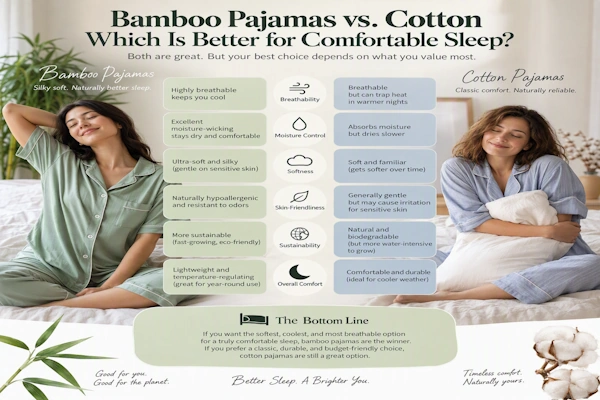
Bamboo Pajamas vs. Cotton: Key Differences
Although both materials can provide excellent comfort, their characteristics differ in several ways.
| Feature | Bamboo-derived viscose pajamas | Cotton pajamas |
|---|---|---|
| Softness | Typically silky and smooth | Soft, with texture varying by fabric |
| Breathability | Often breathable, depending on construction | Generally breathable, especially lightweight cotton |
| Moisture handling | Absorbent, but drying performance varies | Absorbent, but may retain moisture |
| Durability | Can require delicate handling | Often durable with proper care |
| Skin comfort | Smooth surface may reduce friction | Often comfortable for sensitive skin |
| Price | Frequently more expensive | Available across many price ranges |
| Environmental impact | Depends heavily on chemical processing | Depends on farming and textile production |
| Appearance | Flowing and luxurious | Casual, classic, or refined |
These differences provide a useful starting point, but fabric performance also depends on garment construction, blends, and individual preferences.
1. Softness and Comfort: Which Fabric Feels Better?
When choosing pajamas, softness is often the first quality people notice.
Bamboo-derived viscose is widely appreciated for its smooth, almost silky texture. It drapes gently over the body and can feel particularly pleasant when moving beneath the blankets.
For sleepers who prefer lightweight clothing with minimal friction, this fabric can offer an appealing experience.
Cotton, however, provides a different kind of comfort.
High-quality cotton jersey can feel exceptionally soft and flexible, while brushed cotton offers a warmer, more substantial sensation.
Premium cotton fabrics, including certain long-staple varieties, can also have an impressively smooth finish.
Which is better?
If you enjoy silky, flowing pajamas, bamboo-derived viscose may be your favorite.
If you prefer a familiar, natural-fiber texture with a cozy feel, cotton is an excellent alternative.
Ultimately, softness is subjective, and neither material is universally superior.
2. Breathability: Bamboo or Cotton for Hot Sleepers?
Sleeping in an overheated bedroom can make it difficult to remain comfortable.
For people who frequently wake up feeling warm, choosing breathable sleepwear becomes especially important.
Cotton is known for allowing airflow, particularly when manufactured into lightweight, loosely constructed fabrics.
Thin cotton jersey and cotton gauze can be comfortable choices for warm nights.
Bamboo-derived viscose can also feel airy and cool, especially when used in lightweight knitted garments.
However, the claim that bamboo pajamas are automatically more breathable than cotton is not consistently supported by direct comparative testing.
Fabric thickness, knit density, fit, and finishing treatments can influence breathability as much as the fiber itself.
Best Pajamas for Hot Sleepers
If you tend to overheat at night, consider:
- Lightweight bamboo-derived viscose pajamas.
- Thin cotton jersey sleepwear.
- Loose-fitting cotton shorts and T-shirts.
- Breathable fabrics without heavy decorative layers.
- Garments that allow unrestricted movement.
The winner: Both materials can be suitable for hot sleepers. Choose a lightweight construction rather than relying solely on the fabric label.
3. Moisture Absorption and Night Sweating
Moisture management is another important consideration when selecting comfortable sleepwear.
Both cotton and bamboo-derived viscose can absorb moisture.
Cotton absorbs perspiration effectively, but once saturated, it may remain damp for some time.
Bamboo-derived viscose is also absorbent, although its drying speed varies according to fabric construction and manufacturing treatments.
Some brands advertise bamboo pajamas as naturally moisture-wicking. Yet moisture absorption and moisture-wicking are not identical.
A fabric can absorb considerable moisture without efficiently transporting it away from the skin or drying quickly.
For people who experience frequent night sweating, this distinction matters.
Which Is Better for Night Sweats?
Neither bamboo-derived viscose nor ordinary cotton is guaranteed to keep you dry.
Look for garments with demonstrated moisture-management performance, a lightweight design, and a comfortable fit.
If night sweats are persistent, severe, or unexplained, it is also sensible to discuss them with a healthcare professional.
4. Bamboo vs. Cotton for Sensitive Skin
People with sensitive skin often pay particular attention to clothing texture.
Rough seams, restrictive waistbands, harsh dyes, and certain finishing chemicals can make otherwise attractive pajamas uncomfortable.
Bamboo-derived viscose has a smooth surface that some individuals find pleasant against delicate skin.
Cotton is also widely used in clothing intended for sensitive skin, particularly when the material is soft and free from irritating finishes.
However, bamboo pajamas should not automatically be considered hypoallergenic or antibacterial.
Although natural bamboo contains compounds studied for antimicrobial properties, those properties are not necessarily retained in chemically processed bamboo viscose.
What Should You Choose?
For sensitive skin, prioritize:
- Soft fabrics with minimal surface friction.
- Flat seams and comfortable waistbands.
- Fragrance-free laundry detergents.
- Garments free from irritating decorative elements.
- Reputable textile safety certifications.
Either fabric may work well, depending on your individual skin response.
5. Which Pajamas Are Better for Winter?
Comfortable winter sleepwear should provide warmth without making you feel excessively hot.
Cotton offers numerous options for colder temperatures.
Brushed cotton, cotton flannel, and thicker cotton knits can provide a cozy sensation during chilly evenings.
Bamboo-derived viscose is often associated with lightweight pajamas, although thicker bamboo blends are also available.
Because warmth depends heavily on fabric thickness and construction, a substantial bamboo blend may feel warmer than a very thin cotton garment.
Still, cotton flannel remains a practical choice for people who enjoy traditional winter pajamas.
Best choice for cold nights: Thick cotton jersey or flannel is often a convenient option, while heavier bamboo blends may suit those who prefer a smoother texture.
6. Durability: Which Fabric Lasts Longer?
Pajamas are worn frequently and usually washed more often than many other garments.
Consequently, durability is an important factor when deciding whether a purchase offers good value.
Cotton is generally known for its dependable performance under regular laundering, although lower-quality cotton may shrink, fade, or lose its shape.
Bamboo-derived viscose can be more delicate, particularly when wet, because conventional viscose fibers may lose strength after absorbing water.
Some bamboo pajamas also contain elastane, which requires careful washing to preserve elasticity.
How to Make Your Pajamas Last Longer
For either fabric:
- Read the manufacturer’s care label.
- Use a gentle detergent.
- Avoid unnecessary high-temperature washing.
- Wash delicate garments inside out.
- Avoid excessive tumble-dryer heat.
- Store pajamas completely dry.
With appropriate care, quality garments made from either material can remain comfortable for a long time.
The winner: Cotton often has an advantage in everyday practicality, particularly when compared with delicate bamboo viscose.
7. Are Bamboo Pajamas More Eco-Friendly Than Cotton?
Environmental sustainability is one of the most frequently discussed aspects of bamboo clothing.
Bamboo is a fast-growing plant that can be cultivated without replanting after every harvest.
This has helped establish its reputation as an environmentally attractive raw material.
However, turning bamboo into viscose usually requires chemical processing, and the environmental impact depends on how those chemicals, water, and emissions are managed.
Cotton cultivation also has environmental consequences, including water consumption, land use, and potential pesticide application.
Organic cotton production can reduce reliance on certain synthetic agricultural chemicals, although it is not automatically impact-free.
Is Bamboo Clothing Sustainable?
The answer depends on the manufacturing process rather than the plant alone.
When shopping, consider whether brands provide transparent information about their materials and production practices.
Certifications such as OEKO-TEX STANDARD 100 can indicate testing for certain harmful substances, but they do not certify that a product is environmentally sustainable.
For sustainability-focused shoppers, durability, responsible manufacturing, and long-term use are important considerations.
8. Price Comparison: Are Bamboo Pajamas Worth the Money?
Bamboo-derived viscose pajamas are frequently marketed as premium sleepwear.
Their smooth texture and elegant appearance can make them attractive to consumers seeking a more luxurious bedtime experience.
Cotton pajamas are available across a much broader range of prices, from inexpensive everyday sets to premium designer collections.
A higher price, however, does not automatically mean better comfort or superior quality.
Before purchasing, examine the stitching, fabric composition, garment thickness, and washing instructions.
A well-made cotton set may provide better long-term value than an inexpensive bamboo-viscose garment, while high-quality bamboo pajamas may justify their price for someone who especially enjoys their texture.
9. Bamboo Pajamas vs. Cotton for Children
Children’s sleepwear requires special consideration because comfort is only one aspect of a suitable garment.
Both cotton and bamboo-derived viscose can feel soft against the skin.
However, parents should also consider garment fit, durability, laundering requirements, and applicable children’s sleepwear safety standards.
In the United States, children’s sleepwear is subject to specific flammability requirements, with certain exemptions for qualifying snug-fitting garments.
A fabric being natural, soft, or breathable does not automatically make it compliant with these requirements.
Always purchase children’s pajamas from reputable manufacturers that follow the relevant safety regulations.
10. How to Choose the Most Comfortable Pajamas
Instead of focusing exclusively on whether bamboo or cotton is better, consider your actual sleeping habits.
If you sleep hot: Look for lightweight, loose-fitting pajamas with good airflow.
If you enjoy a silky texture: Bamboo-derived viscose may feel particularly appealing.
If you prefer traditional fabrics: Soft cotton jersey offers familiar comfort.
If you want easy maintenance: Durable cotton garments may be more convenient.
If you sleep in a cold bedroom: Choose thicker cotton, flannel, or another appropriately insulated fabric.
If you have sensitive skin: Pay attention to seams, dyes, detergents, and your personal response to the material.
The best sleepwear should feel comfortable enough that you barely notice it during the night.
Frequently Asked Questions About Bamboo and Cotton Pajamas
Are bamboo pajamas better than cotton pajamas?
Bamboo-derived viscose pajamas often feel silkier, while cotton provides familiar softness and a wide range of fabric options. Neither is universally better; personal comfort and garment quality matter most.
Do bamboo pajamas keep you cooler at night?
Some bamboo-viscose fabrics feel cool against the skin, but this does not guarantee better cooling throughout the night. Breathability depends on fabric weight, construction, and fit.
Are bamboo pajamas good for summer?
Yes, lightweight bamboo-derived viscose pajamas can be comfortable in summer. Thin cotton pajamas are also an excellent option for warm weather.
Do bamboo pajamas shrink?
They can shrink if washed or dried incorrectly. Always follow the care instructions, particularly regarding water temperature and tumble drying.
Are cotton pajamas healthier than bamboo pajamas?
There is no strong evidence that either material is inherently healthier for most people. Comfort, cleanliness, skin tolerance, and appropriate fabric construction are more relevant considerations.
Can you wear bamboo pajamas every night?
Yes, provided they are comfortable, maintained according to their care instructions, and do not cause skin irritation.
Which material is better for sleeping without air conditioning?
Lightweight cotton and bamboo-derived viscose can both be suitable. Loose garments, breathable bedding, and adequate room ventilation are especially important.
Final Verdict: Bamboo Pajamas or Cotton?
When comparing bamboo pajamas vs. cotton, the ideal choice comes down to the sleeping experience you prefer.
Bamboo-derived viscose stands out for its silky finish, graceful drape, and lightweight sensation. It can be an attractive option for people who enjoy smooth, luxurious sleepwear.
Cotton remains a dependable favorite thanks to its versatility, breathability, broad availability, and often simpler maintenance.
Neither fabric guarantees cooler sleep, better skin health, or improved sleep quality for everyone.
If you’re searching for elegant pajamas with a delicate touch, bamboo-derived viscose is worth considering. If you value practical comfort, familiar textures, and everyday durability, cotton may be the more suitable investment.
Ultimately, the best pajamas are the ones that help you feel relaxed, comfortable, and ready for a peaceful night’s rest.
Sometimes, improving your bedtime routine doesn’t require an expensive transformation. A thoughtfully chosen pair of pajamas can be a pleasant place to start.








Leave a Reply